Comparative Analysis of the Mathematical Models of Fred Bond, Steve Morrell, and Roddy Valle on Energy Consumption Applied to Mineral Grinding
DOI:
https://doi.org/10.71701/jec3mf91Keywords:
Energy consumption, grinding, particle size analysis, the Steve Morrell model, the Bond’s work index model, the Roddy Valle modelAbstract
In the mining field, optimizing grinding processes is essential for energy efficiency and the overall profitability of operations. In this context, the accurate estimation of energy consumption during the comminution stage of the ore plays a crucial role.
It is estimated that between 30% and 40% of the total energy is consumed during this phase, highlighting the importance of selecting reliable predictive models for analysis in the grinding plant.
Energy consumption estimates in grinding require predictive models based on empirical mathematical formulas, among which three models stand out for this purpose: Fred Bond (1952), Steve Morrell (2004), and Roddy Valle (2020).
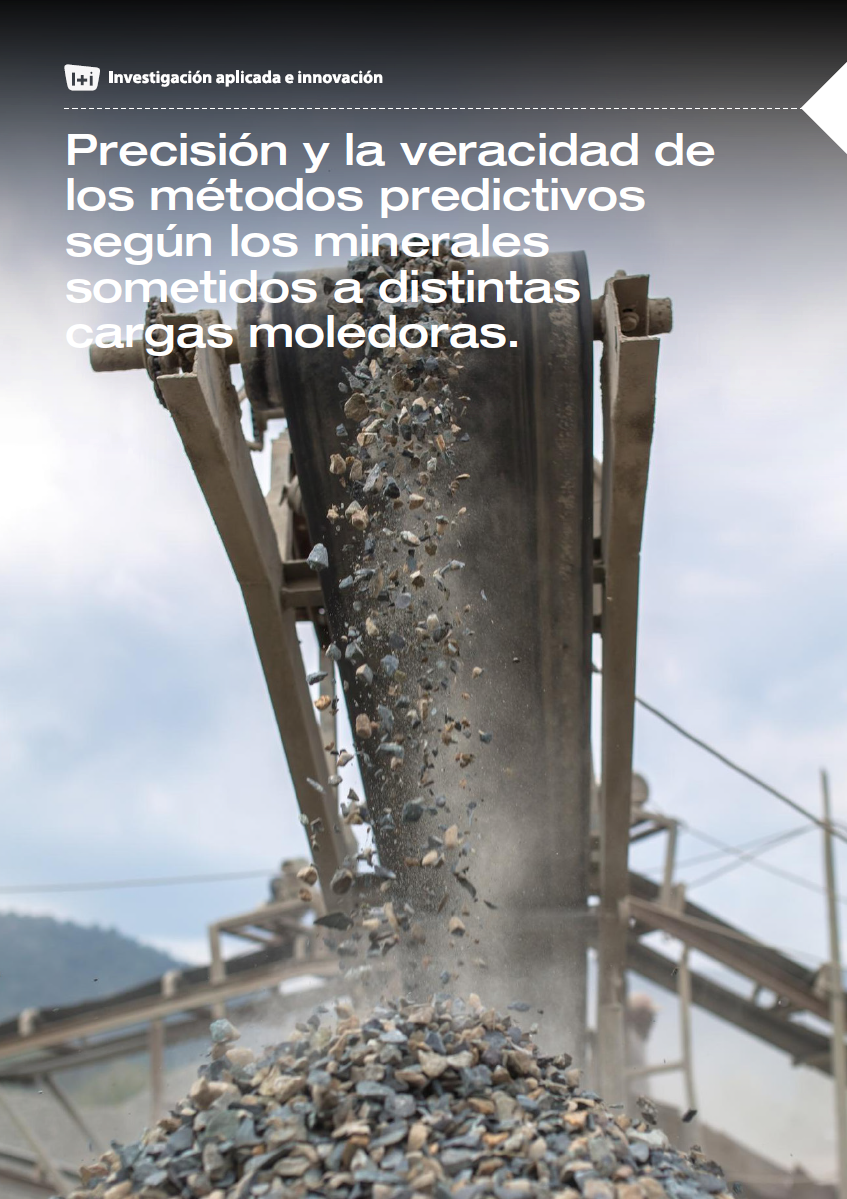
This study relates the accuracy and reliability of the predictive methods according to the mineral types under different grinding media loads.
The metallurgical tests aim to identify the most accurate and reliable predictive model for energy consumption among the three approaches analyzed. To achieve this, the estimates provided by these models will be compared with actual energy consumption data obtained through the eGauge monitoring system, which provides real-time values of the electrical power triangle.
Batch grinding tests were carried out with six different types of ores and varied ball loads, including 30%, 35%, and 40% of the mill volume, at a critical speed of 70%.
The results show that among the analyzed approaches, the predictive model that provides the most accurate and applicable results under various operating conditions is the Steve Morrell model.
It is worth noting that the Roddy Valle model presented an error very close to that of Morrell in laboratory tests, with values of 9.22% compared to 8.49% for Morrell. The Bond model showed an error of 19.58%, demonstrating its lack of applicability in laboratory-scale grinding energy consumption tests conducted at TECSUP.
The experimental tests for Work Index, grinding, and particle size analysis were carried out in the mineral processing laboratories of TECSUP, following the protocols established in their respective equations.
Downloads
References
[1] Álvarez, B. (2010). Análisis de la influencia de los modelos de distribución de tamaño de partículas en la determinación de consumos energéticos en molienda mediante el método de Bond [Tesis doctoral, Universidad de Oviedo].
https://core.ac.uk/download/pdf/71839999.pdf
[2] Arancibia, M. (2015). Dimensionamiento de molino de bolas por el método de Bond, aplicando factores correctores de la fórmula.
https://qaqc2000.blogspot.com/2015/10/dimensionamiento-de-molino-de-bolaspor.html
[3] Armas, H., & Poma, J. (2013). Evaluación del consumo de energía eléctrica en la operación de conminución de la planta concentradora de Huari-UNCP [Tesis de licenciatura, Universidad Nacional del Centro del Perú].
https://repositorio.uncp.edu.pe/bitstream/handle/20.500.12894/577/TIMM_23.pdf?sequence=1&isAllowed=y
[4] Casali, A. (2014). Metodología para la determinación indirecta del índice de Bond en tamaños de partícula ultrafinos [Tesis de ingeniería, Universidad de Chile].
[5] Fernández, M. (2012). Metodología para la determinación indirecta del índice de Bond en tamaños de partícula ultrafinos [Tesis doctoral, Universidad de Oviedo].
https://digibuo.uniovi.es/dspace/bitstream/handle/10651/13449/TD_miguelonofrefernandez.pdf
[6] Morrell, S. (2021). The Morrell method to determine the efficiency of industrial grinding circuits: 2021 revision.
[7] Torocahua, F. (2014). Diseño e implementación de un tablero analizador de redes para la medición de parámetros eléctricos y de calidad de la energía eléctrica [Tesis de bachiller, Universidad Católica de Santa María].
Downloads
Published
Issue
Section
License
Copyright (c) 2025 Luis Huere (Autor/a)

This work is licensed under a Creative Commons Attribution-NonCommercial 4.0 International License.