Neutralization and Sulfidation of Acid Mine Drainage from a Mining Unit in Cerro de Pasco
DOI:
https://doi.org/10.71701/x51n4x49Keywords:
Acid mine drainage, alkalization, sulfidationAbstract
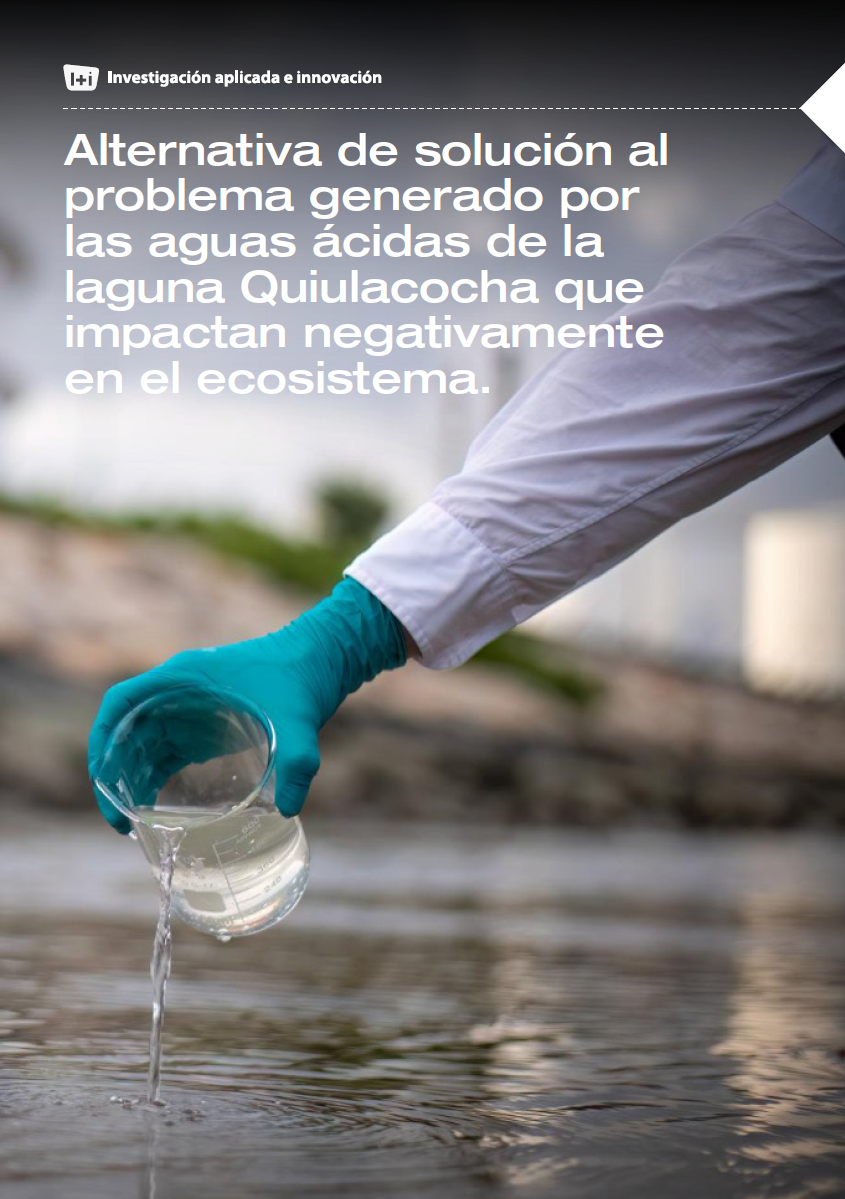
This study proposes an alternative solution to the environmental problems caused by the acidic waters of the Quiulacocha Lagoon, which discharge into the San Juan River and negatively affect the ecosystem, particularly the population of the Simón Bolívar district in the province of Pasco. A quantitative, explanatory, and experimental methodology was applied, consisting of collecting composite samples of acid mine drainage from a point in the Quiulacocha Lagoon for characterization. The physicochemical parameters were found to exceed the Maximum Permissible Limits (LMP) established in D.S. 010-2010-MINAM and the Environmental Quality Standards (ECA), Category 3, defined in D.S. 004-2017-MINAM.
For the treatment, an alkalization method using a 10% m/v lime solution was applied, followed by a sulfidation stage using a 10% m/v sodium hydrosulfide (NaSH) solution to increase the removal efficiency of iron, copper, lead, and zinc. In the alkalization stage, the results slightly exceeded environmental standards for iron, copper, and zinc, but not for lead. With the additional sulfidation stage, metal removal levels far surpassed regulatory requirements: 98.30% for iron, 99.83% for copper, 99.48% for lead, and 66.59% for zinc.
In conclusion, the waters of the Quiulacocha Lagoon contain high concentrations of heavy metals that pose serious risks to environmental and public health. The alkalization method with 10% m/v lime, combined with an additional sulfidation stage using 10% m/v NaSH, represents a viable alternative for neutralizing the acidic waters of the lagoon and preventing contamination of the San Juan River in the Simón Bolívar district, Pasco.
Downloads
References
[1] Aduviri, O. (2006). Drenaje ácido de mina: Generación y tratamiento. Instituto Geológico y Minero de España, Dirección de Recursos Minerales y Geoambiente.
[2] Broughton, L. S., & Bonelli, J. (1995). Guía ambiental para el manejo del drenaje ácido de mina. Ministerio de Energía y Minas.
[3] Comisión Nacional del Agua & Mekorot. (2014). San Luis Río Colorado, Estado de Sonora: Tratamiento de efluentes con el suelo del acuífero. Recomendaciones de mejora. Development and Enterprise Ltd.
[4] Gutiérrez Pulido, H., & De la Vara Salazar, R. (2008). Análisis y diseño de experimentos. McGraw-Hill Interamericana.
[5] Jennings, E. R., Neuman, D. R., & Blicker, P. S. (2008). Acid mine drainage and effects on fish health and ecology: A review. Reclamation Research Group, LLC.
[6] Oré, S. (2015). Recuperación de los metales pesados presentes en el drenaje ácido de mina mediante la precipitación selectiva para su posterior utilización [Tesis de licenciatura, Universidad Nacional del Centro del Perú].
[7] Tilley, E., et al. (2015). Compendio de sistemas y tecnologías de saneamiento. Instituto Federal Suizo para la Ciencia y la Tecnología Acuática.
[8] Villachica, C., Llamosas, J., & Villachica, J. (2005). Tecnología nacional comprobada para el tratamiento de efluentes ácidos mineros. En IV Congreso Internacional de Medio Ambiente en Minería y Metalurgia, 13–16 de julio de 2005. SMALLVILL SAC – Consulcont S.A.C.
Downloads
Published
Issue
Section
License
Copyright (c) 2025 Sergio Rojas, Yorsel Mayhua (Autor/a)

This work is licensed under a Creative Commons Attribution-NonCommercial 4.0 International License.